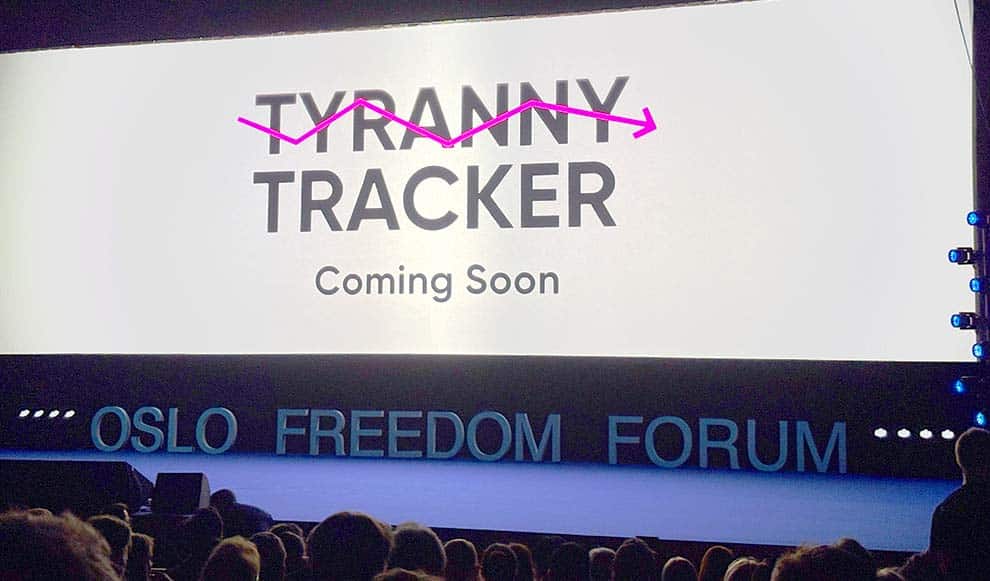
A New Index Sorts Regimes by How Power Actually Works
The Human Rights Foundation's Tyranny Tracker distinguishes democracies from hybrid and authoritarian regimes using qualitative thresholds — not aggregated scores — to capture the moment when democratic systems break down.
The Human Rights Foundation has launched the Tyranny Tracker, an index that classifies 179 countries and territories not by numerical scores but by qualitative thresholds: is electoral competition genuine? Can dissent function? Do institutions actually constrain executive power? The approach aims to capture what aggregated indices often miss — the moment when a democracy under pressure crosses into hybrid authoritarianism, where elections continue but transfer of power becomes “highly unlikely.”
The distinction matters in practice. Thailand and Singapore are often coded as “flawed democracies” elsewhere, but the Tracker reclassifies them as hybrid authoritarian regimes because courts and legal mechanisms systematically prevent genuine political competition. Mexico, by contrast, remains democratic despite pressure — judicial capacity to constrain executive initiatives persists. Ukraine’s wartime emergency governance, the researchers argue, shouldn’t be confused with authoritarian consolidation, as contestation and oversight continue.
Of the 179 jurisdictions assessed, 74 are democracies, 25 are hybrid authoritarian, and 80 are fully authoritarian. That puts 75 percent of the world’s population under some form of authoritarianism — a statistic driven by the sheer scale of countries like China, India, Indonesia, and Russia. The framework rests on 45 indicators across three pillars: electoral competition, freedom of dissent, and institutional accountability. Classifications will be reassessed annually, with adjustments made when major events warrant.
What’s notable here is the emphasis on executive-led erosion and judicial independence — dimensions that matter for anyone interested in how governance systems actually function, not just how they’re formally structured. Democracy, in this view, isn’t a score but a set of capacities that can be present, weak, or absent. The question isn’t where a country ranks, but whether power can genuinely change hands.