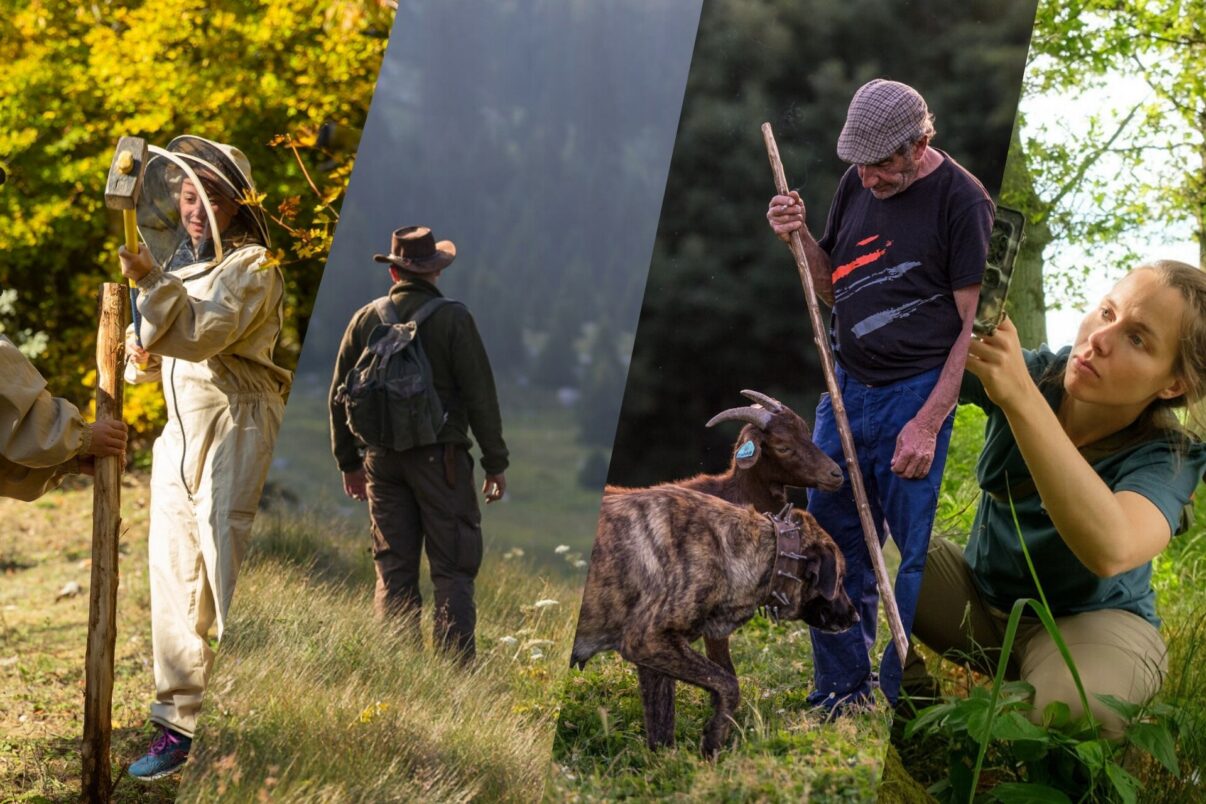
Coexistence guidance equips European mayors to govern alongside returning wildlife
A new toolkit launched by Rewilding Europe offers municipal leaders practical frameworks for human-wildlife coexistence — recognizing local governance as the crucial layer where ecological recovery becomes lived experience.
As wolves, bears, beavers, and bison return to European landscapes, the question isn’t whether people can live with wildlife — it’s how governance structures enable that coexistence. A new guide launched by Rewilding Europe and the Endangered Landscapes & Seascapes Programme treats this as a governance challenge, not merely an ecological one. “Living well with wildlife: A practical guide” provides mayors and municipal authorities with concrete tools to co-design local strategies, mediate conflict, and shift communities from tolerance to what the authors call “shared prosperity.”
The guidance arrived at a moment of institutional readiness — countries across Europe are drafting National Nature Restoration Plans, creating openings for local leadership to shape implementation. More than 680 participants from 70 countries joined the launch webinar, including municipal representatives, farmers, and policymakers. The turnout signals recognition that rewilding is fundamentally about governance at the community scale: who decides how land is used, whose knowledge counts, and how benefits and burdens are distributed when ecosystems change.
The guide draws on cases from Italy’s Bear-Smart Communities to wolf return initiatives across the continent, emphasizing that coexistence requires processes — citizen science, deliberative forums, adaptive management — not just policies. Amy Duthie, Rewilding Europe’s Head of Upscaling, framed local leaders as essential actors in nature recovery, responsible for translating national plans into lived arrangements. The toolkit doesn’t prescribe solutions; it offers a step-by-step process for developing context-specific strategies, acknowledging that every place brings different histories, ecologies, and tensions.
This is governance infrastructure for ecological change — practical, localized, and designed to be tested in the field. Whether it works depends less on the guide itself than on the municipal capacity, political will, and social cohesion it assumes. But as a framework for making nature recovery governable at the human scale, it reflects a growing understanding that rewilding isn’t something done to communities, but through them.