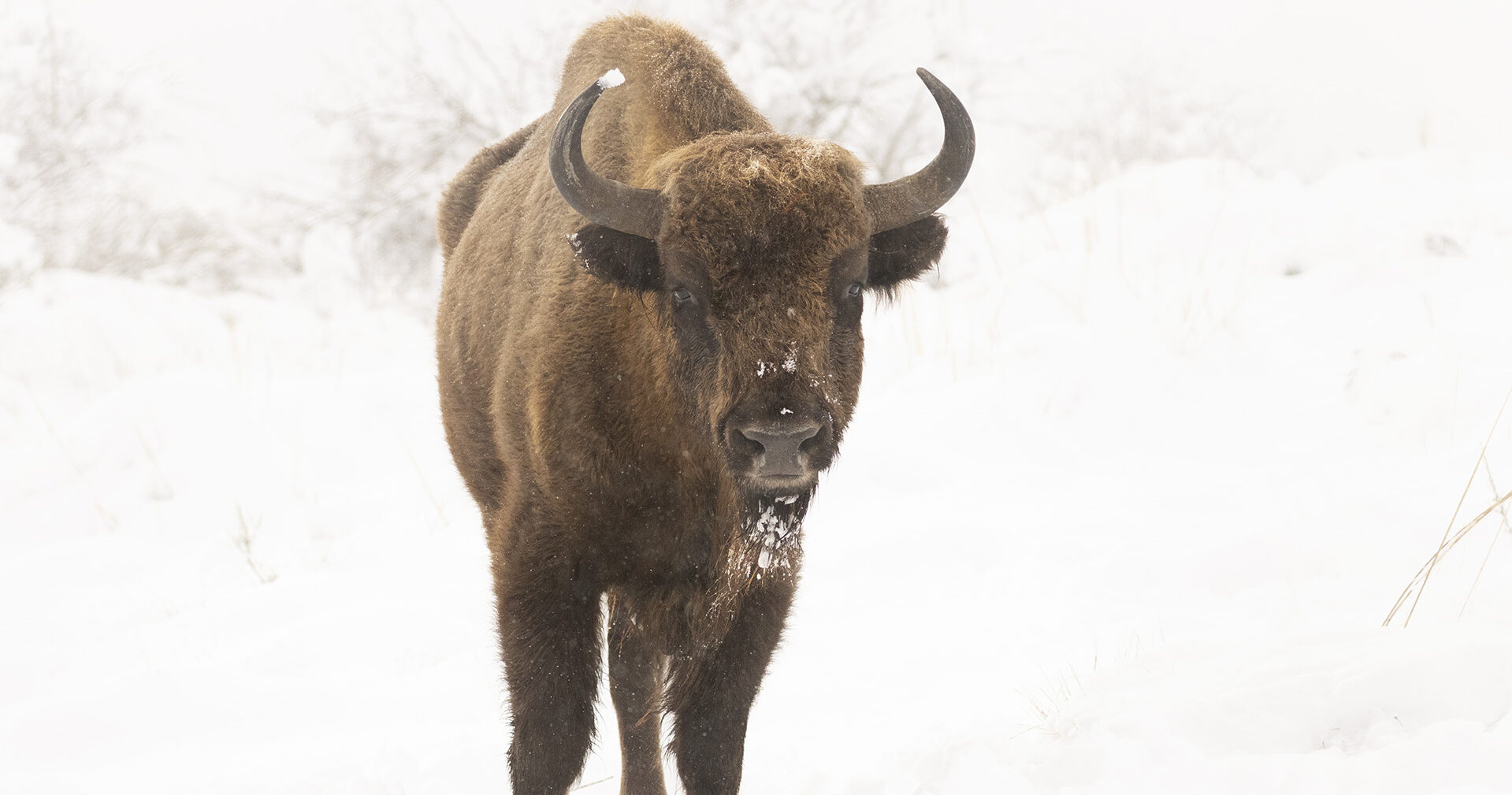
European bison return to the Iberian Highlands — and to the policy question
Nine European bison have been released in Spain's Iberian Highlands as part of a cross-European study testing how keystone species can restore degraded landscapes — and whether rewilding can offer viable development pathways for depopulating rural communities.
Nine European bison have arrived in El Recuenco, a village of 80 in Spain’s Iberian Highlands — the first time the species has been released in this landscape. Sourced from a private estate near Madrid, the herd will spend several weeks in an adaptation enclosure before being released into 400 hectares of publicly owned woodland. The initiative, led by Rewilding Spain, is designed to test whether bison can adapt to Mediterranean conditions and deliver measurable benefits: wildfire risk reduction through grazing, ecosystem restoration through their role as landscape engineers, and economic renewal through nature-based tourism.
The release is embedded in a larger study coordinated by the University of the Basque Country, the University of Manchester, and ECONOVO. Researchers will track stress levels, diet composition, and movement patterns using GPS collars, then replicate the methodology across bison populations from the Netherlands to Azerbaijan. The goal is not merely symbolic — it’s to establish the actual ecological range of the European bison and clarify how the species influences woody vegetation and fire-prone landscapes. This is governance-as-experiment: testing whether a keystone species can function as both ecological infrastructure and economic catalyst.
El Recuenco’s municipal council requested the herd after witnessing the impact of Tauros and Przewalski’s horses at other Iberian rewilding sites. The council led an extensive public dialogue process — talks, site visits, consensus-building — before committing public land to the project. The woodland will remain open for timber extraction, hunting, mushroom picking, and recreation. Mayor Enrique Collada framed the decision explicitly: “We expect the bison to help reduce the risk of catastrophic wildfire outbreaks… We are also hoping that this unique and iconic species will attract more visitors to our village, generating new opportunities, jobs, and income.”
The European bison population has grown from fewer than 60 individuals in 1927 to roughly 9,000 today. DNA evidence from Cantabria suggests historical presence on the Iberian Peninsula, though the record remains incomplete. What matters now is not taxonomic purity but functional role: bison can fill the ecological niche left by aurochs and wild horses, shaping vegetation structure and nutrient cycles in ways that degraded forests badly need. This is rewilding not as pastoral fantasy but as deliberate, monitored intervention — testing whether nature-based governance can reverse rural decline while restoring landscape function.