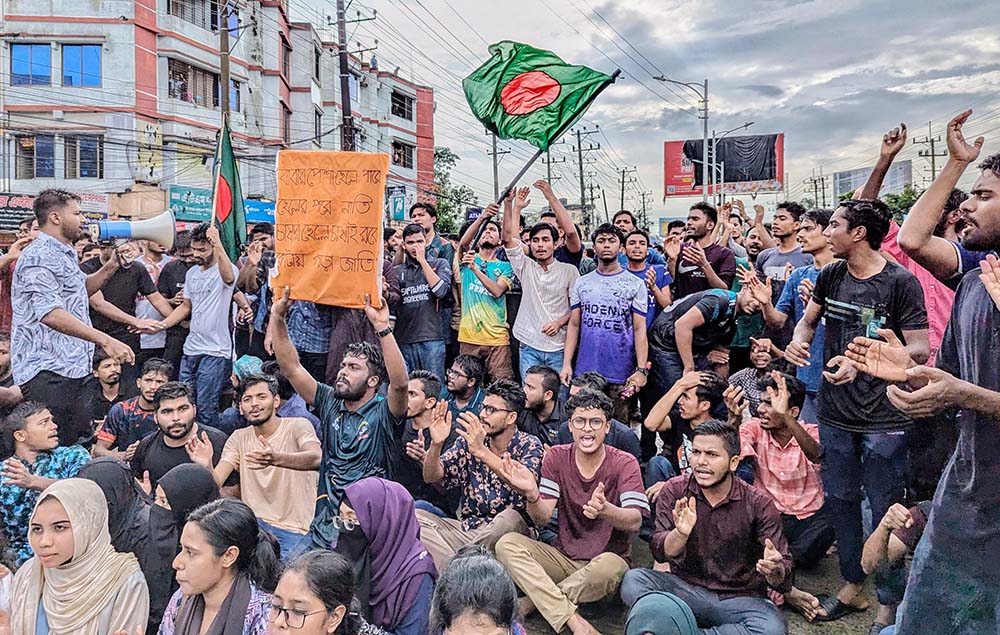
Gen-Z protests erupt globally — but their political direction remains uncertain
Youth-led uprisings across 11+ countries share grievances about inequality and corruption, but don't point toward a clear democratic renewal. The question isn't whether young people can mobilize — it's whether existing governance systems can absorb their demands.
Youth-led uprisings swept through at least 11 countries in 2025, from Nepal to Madagascar to Peru, challenging regimes over inequality, corruption, and economic insecurity. Protesters shared symbols — skull and crossbones from the manga ‘One Piece’ — and messaging across borders, articulating unified demands for accountability. Yet governments responded with lethal force: 30,000 killed in Iran’s ongoing crackdown, 700 in Tanzania during October elections, 76 in Nepal before the government fell. These violent responses suggest the protests are indeed threatening entrenched power — but what comes next remains ambiguous.
The uprisings stem from the same conditions fueling global populism: 68 percent of respondents in the 2025 IPSOS report feel economies are rigged for elites, and economic insecurity explains roughly one-third of recent populist surges. Gen-Z voters are simultaneously driving ultra-right gains in Europe while showing the strongest support for innovative governance experiments like a world parliament — 19 percentage points net support among 18-35 year-olds, versus just 0.5 for older cohorts. The contradiction reveals a generation unified in rejecting elite status quos but fractured about what should replace them.
Interim governments in Bangladesh and Nepal now face their first post-revolution elections, testing whether formal political systems can metabolize street demands. In Bangladesh, the Bangladeshi Nationalist Party’s February victory was immediately contested by the student coalition that led the 2024 revolution. Nepal votes in March. These moments expose a central challenge for planetary governance: mobilization without clear institutional pathways often disperses into either populist capture or fragmented coalitions that struggle to govern.
The pattern suggests governance systems themselves — not just specific regimes — may be reaching a threshold. Young people worldwide are demonstrating a willingness to challenge power at grave personal cost, but the infrastructure for translating street politics into durable democratic renewal remains elusive. As Erica Chenoweth and Matthew Cebul note, protesters target corrupt elites specifically, yet their ambivalence toward democratic elections grows. The question isn’t whether this generation can mobilize. It’s whether existing political forms can evolve fast enough to channel their demands before they calcify into something else entirely.