Normandy's PRELE initiative joins European rewilding network
A regional French programme letting forests and wetlands recover without human interference joins a network of 105 rewilding initiatives — advancing a governance model where ecosystems manage themselves.
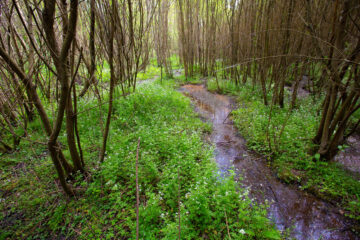
The Programme Régional pour les Espaces en Libre Évolution (PRELE) has become the newest member of Rewilding Europe’s European Rewilding Network, bringing France’s first regional libre évolution initiative into a coalition of 105 rewilding projects across 29 countries. Based in Normandy, PRELE operates on a simple premise: give nature the authority to manage itself. By removing dams, fences, and active management from forests, wetlands, and fallow farmland, the programme creates space for ecosystems to evolve on their own terms.
This is governance by withdrawal — a deliberate relinquishing of control that inverts conventional conservation management. Led by the Conservatoire d’Espaces Naturels de Normandie, PRELE works with private landowners and local authorities to establish sites where human intervention is minimized or eliminated entirely. Unlike many rewilding networks in France, it extends beyond forests to include wetlands and agricultural land, positioning Normandy at the forefront of a broader movement reshaping how French landscapes are governed.
The expansion of libre évolution across France marks a shift in how ecological recovery is understood — not as something humans engineer, but as something they permit. The Arc-Châteauvillain reserve, which joined the network in 2024, now protects over 3,000 hectares of self-regenerating forest. The Dauphiné Alps became a full Rewilding Europe operational landscape in 2025. PRELE’s coordinator Lou Beben describes the network as “an opportunity to connect with others across Europe who are working towards a world that recognises the immense contribution of the wild to our human societies” — a framing that positions wildness not as absence, but as active contributor.
Education sits at the heart of PRELE’s work. Through workshops and school programmes, the initiative fosters what it calls a “deeper, more lasting connection with the wild” — suggesting that governance transformation requires not just policy change, but a shift in how communities perceive their relationship to non-human systems. As climate and biodiversity pressures intensify, the French rewilding movement offers a testable proposition: that some territories are best governed by letting them govern themselves.