One scientist, 1,460 rice varieties, and the architecture of food sovereignty
Dr Debal Deb has spent 30 years conserving indigenous rice from remote Indian tribes — an act of ecological stewardship that doubles as governance practice, returning seed sovereignty to farmers after decades of corporate monoculture.
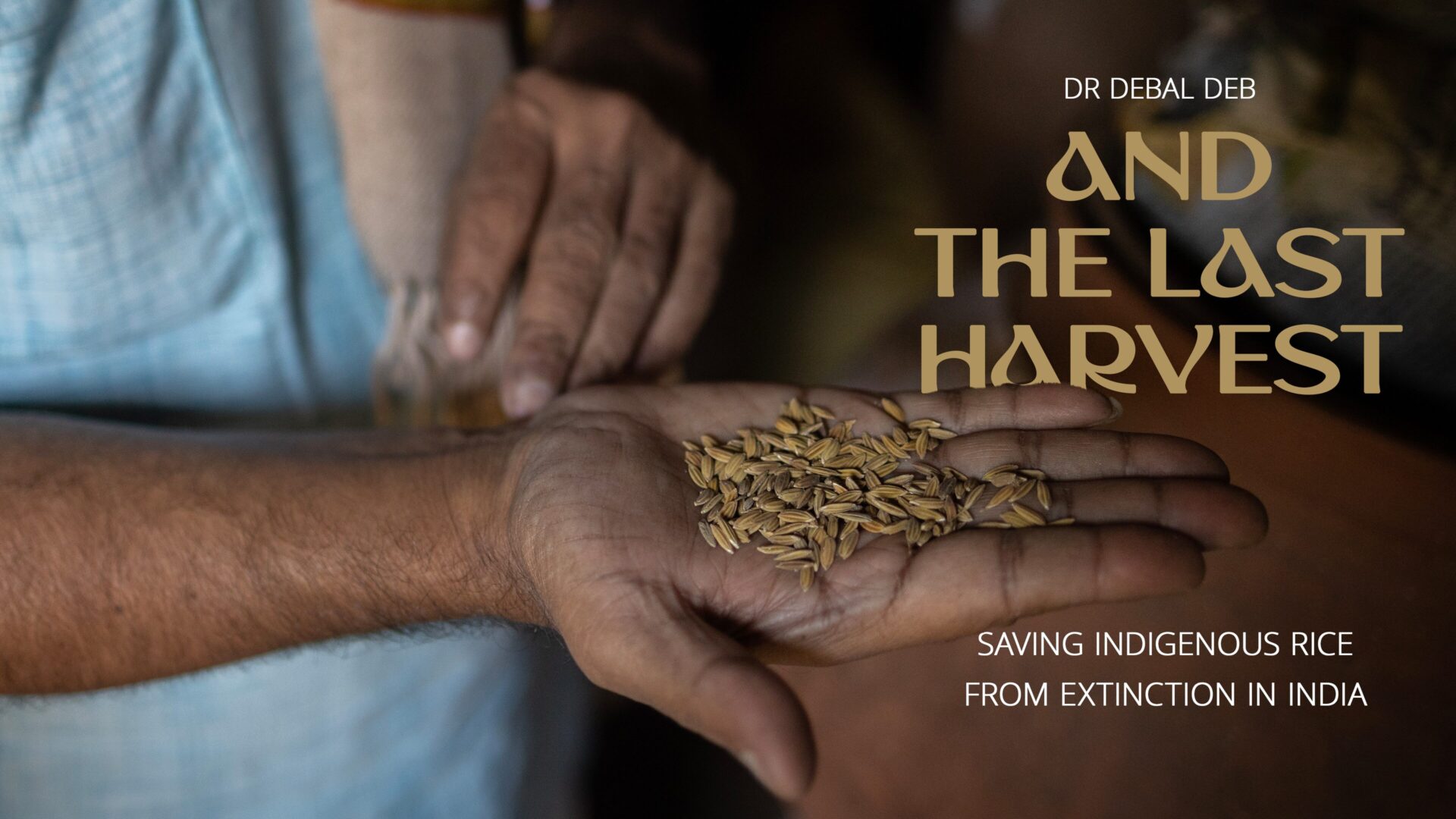
When the Green Revolution swept Asia, it replaced thousands of local rice varieties with genetically uniform strains — a textbook case of governance failure masquerading as progress. Dr Debal Deb has spent three decades undoing that erasure. His farm in India now cultivates 1,460 indigenous rice varieties, each meticulously conserved from remote tribal communities, each carrying genetic traits that respond to flood, drought, salinity, wind. One variety contains twenty times the iron of genetically modified ‘fortified’ strains. The work is rigorous: every grain backed by lab testing in Calcutta, every genotype maintained year on year in an expanding patchwork of fields.
What makes Deb’s work governance — not just conservation — is where the seeds go next. His seed bank, called Vrīhi (Sanskrit for rice), redistributes varieties to local farmers, returning food sovereignty to communities that lost it when corporate agriculture arrived. It’s a form of distributed resilience: knowledge and genetic diversity placed back into the hands of those who can use it, test it, adapt it. A new documentary by Jason Taylor follows journalist Dan Saladino’s encounter with Deb, tracing both the science and the stakes. “We need those drought-tolerant varieties, those varieties that can grow in different challenging conditions,” Saladino notes — a quiet acknowledgment that climate adaptation depends on the diversity we’ve nearly discarded.
The film captures something The Garden often returns to: governance systems must be embodied, not just theorized. Deb’s farm is a living library, his seed redistribution a practice of democratic ecology. Each variety represents thousands of years of iterative innovation by farmers — a commons that corporate uniformity nearly erased. That Deb calls his project Vrīhi because he hopes “it will germinate in the minds of the people, as well as in the fields” suggests he understands the work as cultural as much as agricultural. The story of where food comes from, Saladino says, “is one of the most important stories any human can hear.” It’s also a story about who gets to decide what survives.