Testing Resilience Infrastructure in Cities Rebuilt from Disaster
A three-year transnational project examines how nature-based infrastructure performs in post-disaster cities across Japan, Sweden, and Poland — treating urban recovery as a testing ground for ecological governance under stress.
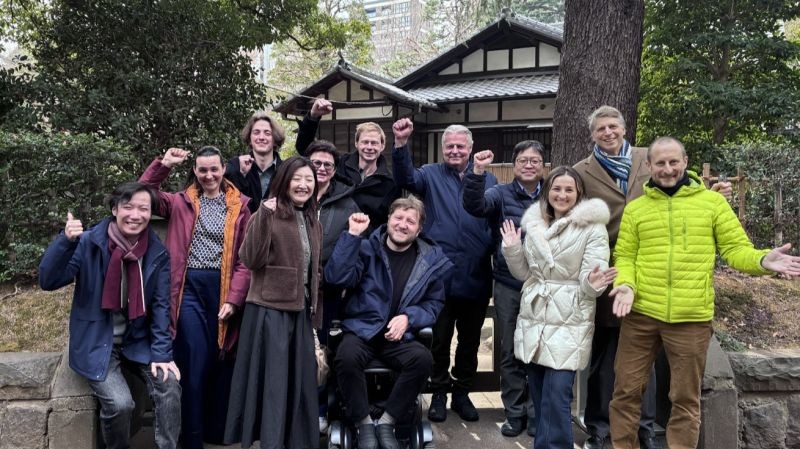
Researchers from Tokyo, Stockholm, and Lodz gathered in February to launch a three-year study of nature-based infrastructure in cities recovering from disasters and conflict. The project, coordinated through Future Earth’s Urban Knowledge-Action Network, focuses on how green infrastructure performs not just as ecological restoration but as social cohesion infrastructure — integrating civic ecology practices, multigenerational healing, and community-led recovery.
The Tokyo kickoff included a field visit to coastal Tohoku, where participants examined memorial sites, reconstructed coastal parks with evacuation functions, and compact public housing in Shinchi (Fukushima) and neighboring municipalities. These sites, rebuilt after the 2011 earthquake and tsunami, offer concrete evidence of how disaster recovery intersects with population aging and demographic decline — conditions that stress-test the viability of nature-based approaches under real-world constraints.
The project aims to accelerate recovery in Ukrainian cities by analyzing post-disaster and post-conflict cases across Asia and Europe. Five research objectives guide the work: understanding green infrastructure’s role in preparedness; examining civic ecology as a pathway for reintegration of returnees and veterans; identifying diverse nature-based responses to crises; exploring infrastructure design across urban-rural gradients; and translating findings into long-term recovery policy. The emphasis on multigenerational perspectives, including children and youth, positions the research as governance practice — not merely academic analysis but participatory knowledge-building with those living through recovery.
The consortium brings together The University of Tokyo, Stockholm Resilience Centre, and the University of Lodz’s Social-Ecological Systems Analysis Lab. By treating urban recovery as a governance laboratory, the project aligns with The Garden’s thesis that systems must be tested and felt, not merely theorized. Collaboration with municipalities, NGOs, and networks like ICLEI aims to ensure findings translate beyond policy papers into implemented practice.