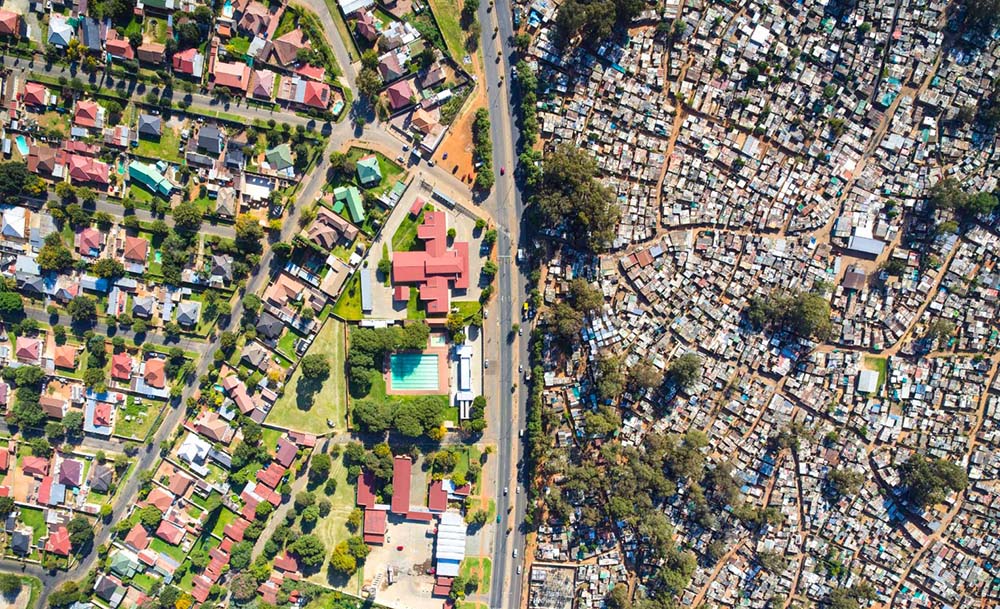
Three reports link extreme wealth concentration to democratic erosion
New assessments from Oxfam, a G20 expert committee, and the World Inequality Lab find billionaire wealth has grown 81% since 2020 while democratic institutions weaken — evidence that governance systems cannot be separated from economic architecture.
Billionaire wealth reached $18.3 trillion in 2025, an 81% increase in real terms since 2020, according to Oxfam’s latest assessment. The concentration is accelerating: fortunes at the top grew 16.2% in the past year alone, three times faster than the average rate since 2020. Meanwhile, 2.6 billion people cannot afford a healthy diet, and food insecurity has risen by 335 million people since 2019.
The governance implications are direct. An expert committee convened by South Africa’s G20 presidency found that countries with high inequality — defined as a Gini coefficient above 0.4, now encompassing 83% of nations and 90% of the global population — are significantly more likely to experience democratic decline. Oxfam’s research shows more unequal countries face up to seven times greater risk of democratic erosion. The committee warned that wealth concentration translates into political inequality through media ownership and campaign finance, eroding institutional trust and fueling polarization.
The G20 committee recommended creating an International Panel on Inequality, modeled on the IPCC, to provide governments with independent assessments of inequality trends and policy impacts. The proposal suggests a governance architecture that would treat economic concentration as a systemic threat requiring coordinated monitoring — much as climate science has shaped environmental governance. The World Inequality Report 2026 emphasized that these outcomes reflect political and institutional choices, not economic inevitability.
The convergence of these reports — from Oxfam, the G20 committee, and the World Inequality Lab — represents a diagnostic consensus: governance systems cannot function democratically when wealth is this concentrated. The question is whether institutions can respond to what the G20 committee called an “emergency” with the same urgency they’ve brought to other planetary-scale challenges.