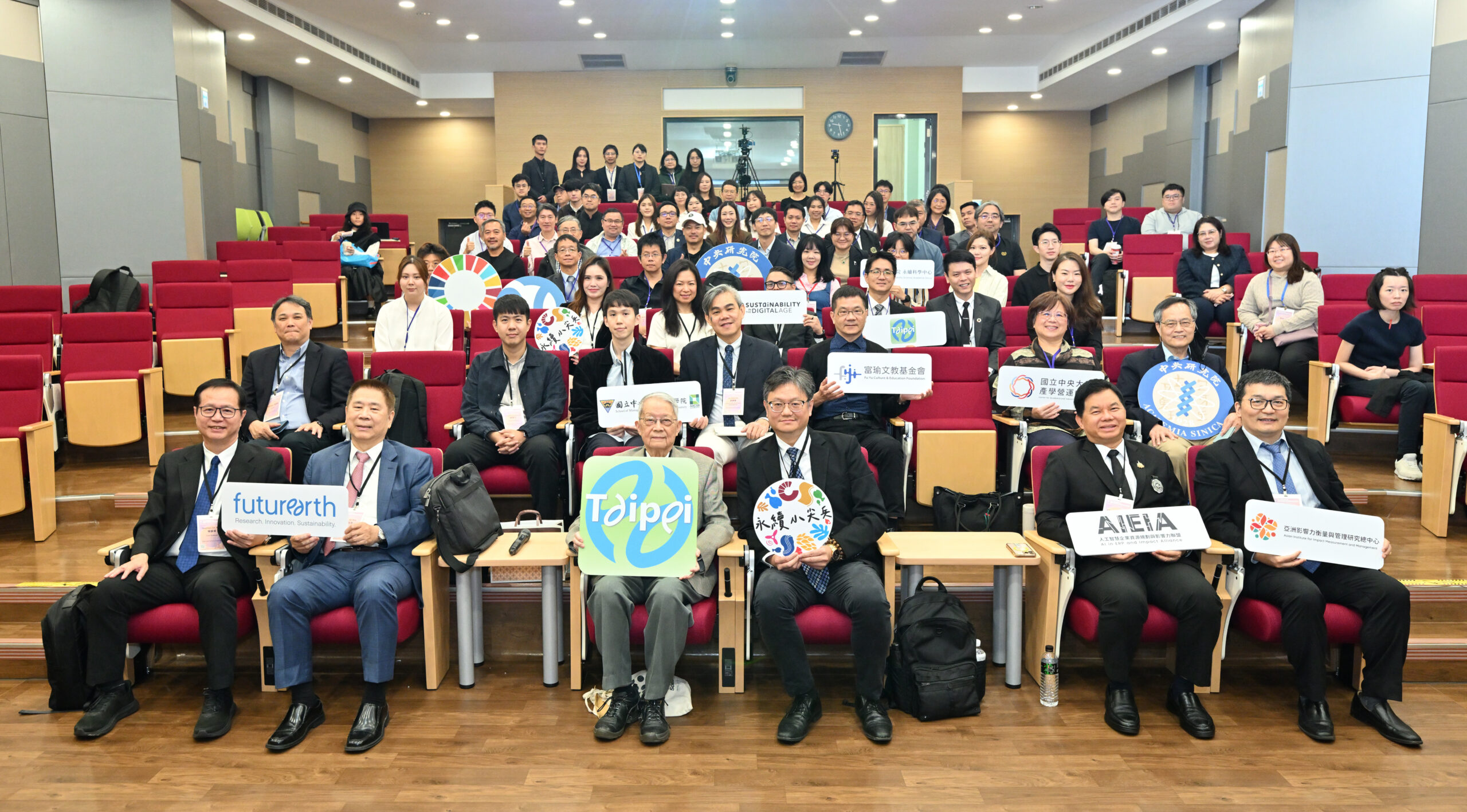
AI for Sustainability Finds Its Test Ground in Taipei
Researchers, policymakers, and industry practitioners gathered in Taipei to explore how artificial intelligence can serve planetary resilience — examining not just technical potential but governance frameworks for equitable deployment.
How do you ensure artificial intelligence serves ecological and social goals without creating new forms of extraction or exclusion? That design challenge shaped the 2025 International Conference on AI for a Sustainable Society, held November 13-14 at Academia Sinica in Taipei. The gathering brought together researchers, industry teams, and policymakers to examine AI’s role in climate adaptation, green finance, and Nature-based Solutions — with particular attention to governance frameworks that might keep these tools accountable.
The conference centered on what organizers called “dual transformation”: the need to innovate both technological systems and sustainability practice simultaneously. Keynote speakers included Academician C.-C. Jay Kuo (USC) questioning whether “Green AI” is achievable at scale, and Dr. Camilo Alejo from Future Earth Canada Hub demonstrating “smart synergy” between AI and Nature-based Solutions. More than ten sessions explored concrete applications — debris flow early warning systems, circular economy platforms, ESG investment tools — alongside policy discussions about transparency, equity, and inclusive deployment.
What distinguished ICAISS2025 was the active friction between academic researchers and practitioners from Salesforce Taiwan, Alpha FinTech, and emerging startups. These conversations surfaced the gap between theoretical models and on-the-ground implementation — the kind of testing ground The Garden considers essential for governance innovation. Taiwan’s position at the intersection of advanced AI development and climate vulnerability makes it a particularly relevant laboratory for these questions.
The conference opened with a performance blending chamber ensemble, DJ, and AI-generated visuals — a reminder that these technologies aren’t neutral tools but shaped by the aesthetic and political choices embedded in their design. Whether AI serves planetary stewardship or simply accelerates existing extraction patterns depends on those design decisions, made visible through practice rather than proclamation.