Digital Twins of Earth: Testing Governance Before the Crisis Arrives
ESA's Digital Twin Earth program creates real-time planetary simulations — not just to model floods or fire, but to stress-test governance responses before disaster strikes. It's scenario planning made operational, fed by satellite data and constrained by physics.
Researchers gathered at the European Space Agency in early February to advance what might be the most consequential development in planetary governance infrastructure: real-time digital replicas of Earth’s interacting systems. Unlike static models, these “digital twins” continuously ingest satellite observations — terabytes daily — to simulate floods in Italy, agricultural stress across continents, and carbon dynamics in managed forests. The key innovation isn’t just predictive accuracy; it’s the integration of human activity, economics, and policy into the simulations themselves.
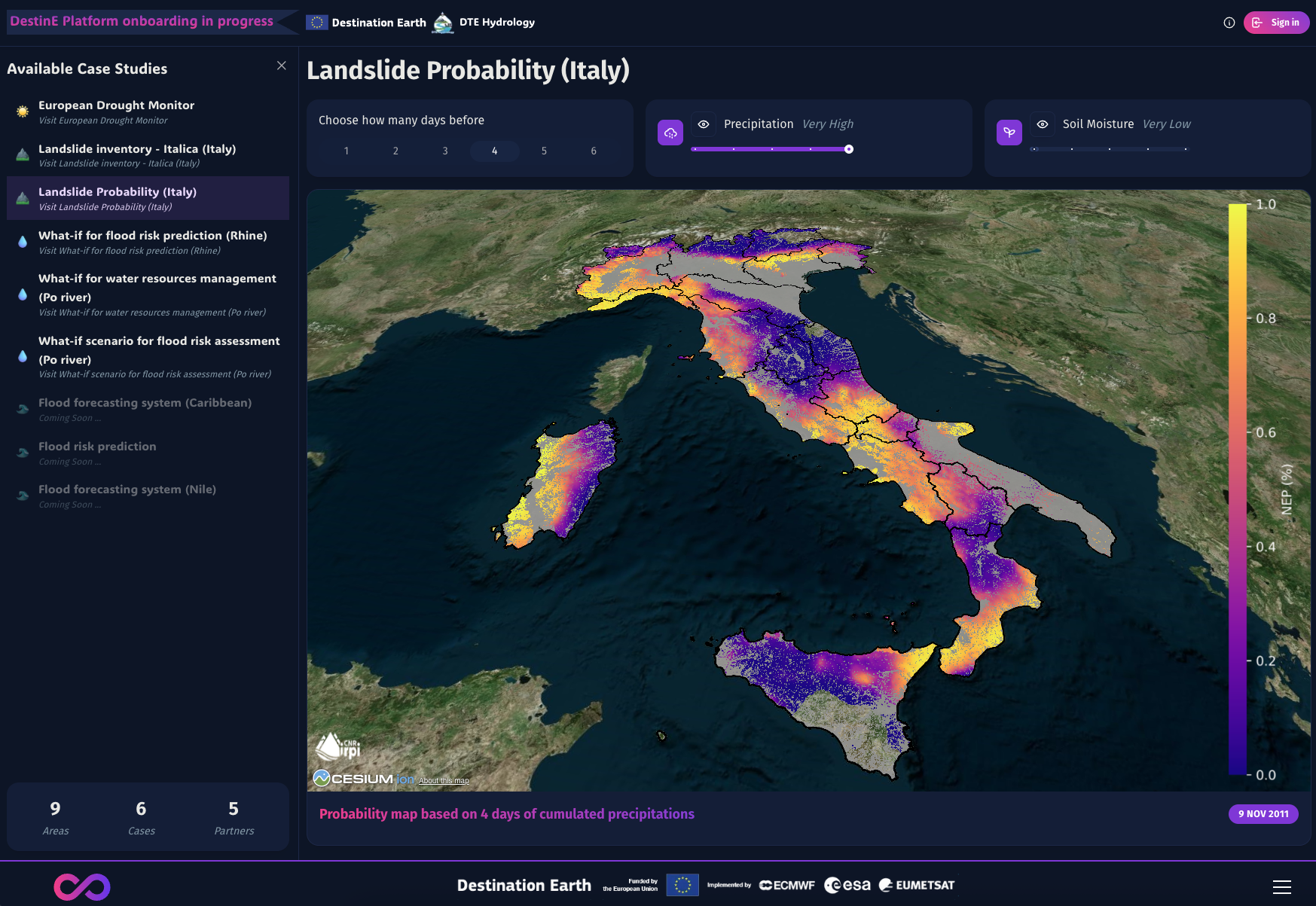
Freya Muir, research coordinator for Future Earth and ESA, calls it “weather forecasting, but for air pollution events in cities, coastal erosion from incoming storms, glacial floods in remote mountain settlements.” The ESA’s DTE Hydrology component demonstrated what-if scenarios for flood risk across Italy based on cumulative precipitation — precisely the kind of tool that makes governance testable rather than theoretical. If you can simulate how a policy intervention affects water security or disaster response, you can iterate before lives are at stake.
The partnership between Future Earth and ESA is directing these technical capabilities toward use cases from low- and middle-income countries: early warning systems for flooding across Ethiopian smallholdings, air quality decision support in Delhi. But challenges remain. Machine learning shortcuts that make planetary-scale simulation computationally feasible also propagate data gaps and errors. And as adoption expands, the infrastructure itself — data centers, computational power — becomes a governance question: who builds it, who accesses it, and at what ecological cost.
The ESA workshop showcased projects like EOAgriTwin and Forest DTC, each modeling a slice of planetary function with the eventual aim of interconnection — where simulated ocean warming feeds into ice sheet melt projections, where agricultural stress cascades into migration models. It’s governance infrastructure disguised as Earth science: a way to feel the consequences of policy choices in advance, to test resilience before the storm.