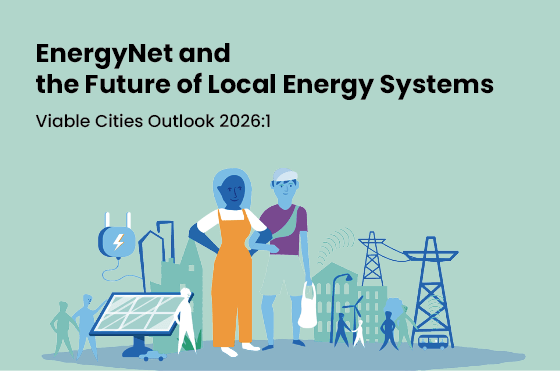
EnergyNet and the Governance of Local Power
Viable Cities explores how local energy systems can reshape urban climate action — not just as infrastructure, but as participatory governance. The EnergyNet model, tested in Lund, treats energy as a coordinated system involving households, property owners, and municipalities.
Viable Cities has published a new outlook examining how local energy systems might become a foundational element of climate-neutral cities. The report describes EnergyNet as a system architecture integrating local production, storage, flexibility, and digital coordination — a shift from centralized grids to participatory infrastructure that households, property owners, and communities can actively shape.
The concept has been developed and tested in Lund, Sweden, through a system demonstrator involving municipalities, property owners, energy companies, and researchers. The Lund trials show how local systems can complement existing infrastructure while strengthening both resilience and cost-effectiveness — and, crucially, how they create new forms of participation in energy transition. This is governance tested in practice, not merely designed on paper.
The outlook situates local energy systems within broader pressures: electrification, digitalization, and growing demands for resilience against price volatility and capacity shortages. It also addresses policy and financing questions, emphasizing the need for open standards, interoperability, and long-term system governance to enable scaling across Europe. The approach resonates with The Garden’s interest in governance as something lived and iterated — infrastructure as a site of democratic possibility.
Jonas Birgersson and Göran Persson will discuss the theme on stage at Transition Lab Forum Live on March 25, focusing on how cities can take a more active role in shaping future energy systems.