ETHAKA Mozambique: Testing Agroforestry as Governance Infrastructure
A 3.5-year project in Mozambique embedded agroforestry systems into public institutions and rural communities — showing how regenerative agriculture becomes a form of governance when it restructures land use, diet, and policy in tandem.
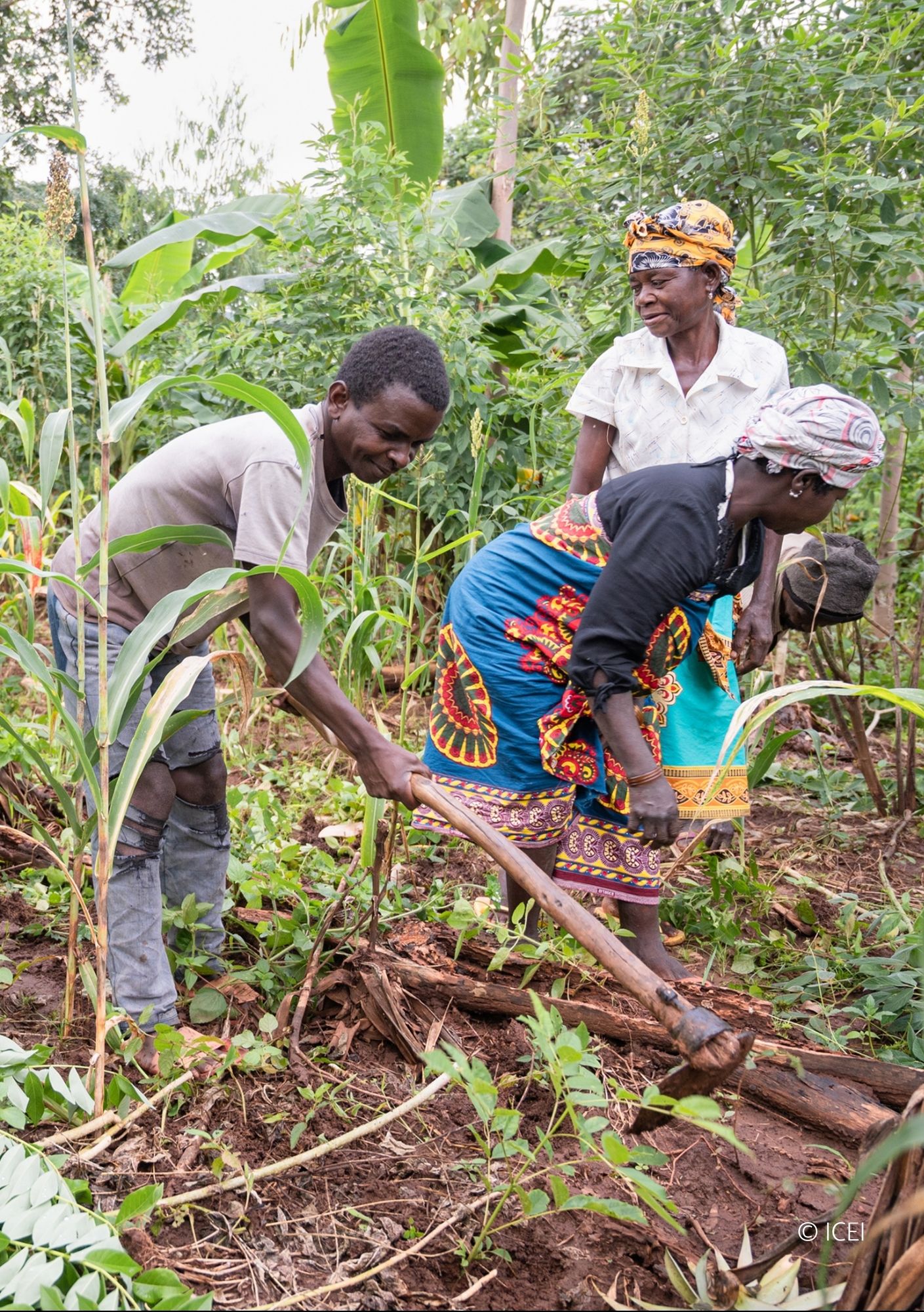
The ETHAKA project, led by Italian NGO ICEI and concluded in late 2025, deployed syntropic agroforestry across Zambézia and Nampula provinces in Mozambique — not merely as an agricultural technique, but as a restructuring of how communities and institutions govern food, land, and resilience. Over 400 households adopted diversified production systems integrating native crops, beekeeping, fish farming, and solar irrigation. Women’s dietary diversity improved from baseline to 27.4% meeting minimum standards, while cyclone-resistant agroforestry plots demonstrated material climate adaptation in a country ranked 153rd in climate readiness.
What distinguishes ETHAKA is its institutional ambition. The project established CISAF, a Centre for Innovation and Lifelong Learning in Agroforestry Systems, hosted at Lúrio University in Quelimane — a permanent node for applied research, extension worker training, and policy development. It also convened a Multi-sectoral Task Force that produced policy briefs presented at provincial and national levels, embedding agroecology into government strategy. This is governance infrastructure: not top-down regulation, but systems built through practice, tested in fields, and scaled through institutions.
The project’s EUR 3.8 million budget from the Italian Agency for Development Cooperation supported work across four pillars: agroforestry implementation, nutrition and food security, institutional capacity building, and the CISAF center. Community skepticism dissolved when demonstration plots survived floods better than monocultures — a reminder that governance legitimacy often grows from visible material results, not rhetoric. ICEI now plans to expand the model to Tanzania, Brazil, and Colombia, treating regenerative agroforestry as a cross-continental governance experiment in ecological stewardship and rural autonomy.
The constraints are familiar: land tenure insecurity, labor demands in the biomass-intensive first year, and the market access gaps that limit smallholder scaling. But the core insight holds — that systems of production are also systems of governance, and testing them requires time, trust, and institutional commitment beyond the project cycle.