Mariestad: Testing governance through climate investment data
A Swedish mid-sized city maps who pays for climate transition and who benefits — finding that while citizens and industry carry costs, the municipality's role is creating conditions for transformation, not funding it.
Mariestad, a city of 25,000 in western Sweden, has done something most municipalities avoid: calculated exactly who must invest how much to reach climate neutrality by 2030, and who benefits. The answer — developed with Linköping University, Sweco, and Stockholm Environment Institute using digital analysis tools — reveals that residents and industry bear the largest costs and reap the greatest returns through lower operating expenses and energy savings, while the municipality’s financial role is surprisingly small.
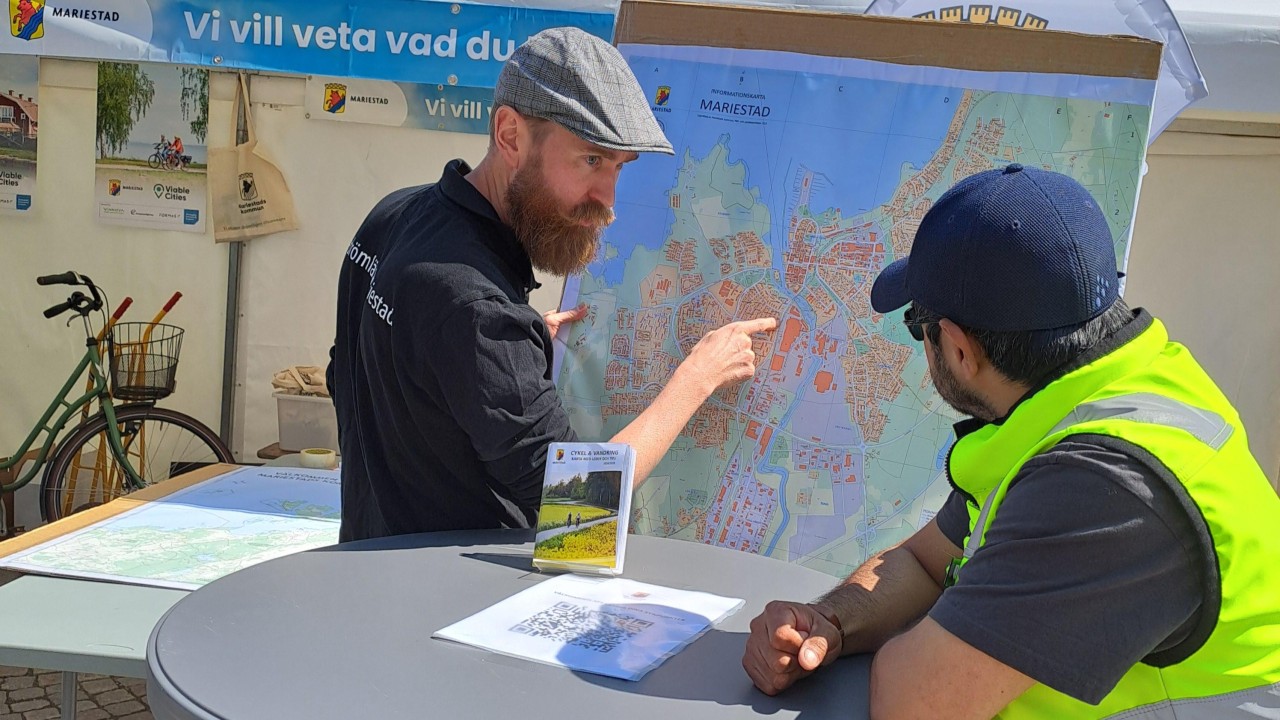
What matters is the municipality’s role as “enabler” — a governance function that sidesteps the fantasy of public sector climate leadership through spending. Mariestad’s expansion plans are expected to drive necessary investments organically; the city’s work is integrating climate measures into ordinary budgets and procurement, creating forums where employers design sustainable commute solutions, and testing IoT sensors that feed real-time air quality data into decision-making. Six new monitors now track particulate matter around the clock.
The city’s transition team — a core group from Volvo, the regional energy company, a UNESCO biosphere reserve, farmers’ federation representatives, and the university — operates as both technical advisors and arena-builders, running employer dialogues and open forums on energy and mobility. Process leader Maria Gustavsson notes the team’s mandate: support transformation through concrete action and collaboration, not aspiration. Council chair Johan Abrahamsson (Moderate) points to Viable Cities network membership as “a fantastic resource” for a small city with large ambitions, particularly the regional Transition Labs that gather western Sweden’s climate-committed municipalities to work through actual conflicts and barriers in policy.
The investment analysis reveals friction points: households face high upfront costs for electric vehicles and home retrofits, challenging lower-income residents; industry needs new infrastructure to stay competitive; farmers must shift practices that are technically feasible but economically uncertain. The municipality, meanwhile, tests digital twin prototypes with high school students to involve youth in urban planning dialogues, coordinates Saturday cycling events, and develops green travel plans with major employers. The work is granular, procedural — and designed to become self-sustaining as culture shifts around what counts as normal.