Östersund tests governance through material reuse — and saves 10 million kronor
A Swedish municipality embeds circular economy into budget processes and public institutions, treating reuse not as a side project but as core governance infrastructure. The results: 250 tons of CO2 avoided, millions saved, and a model others can copy.
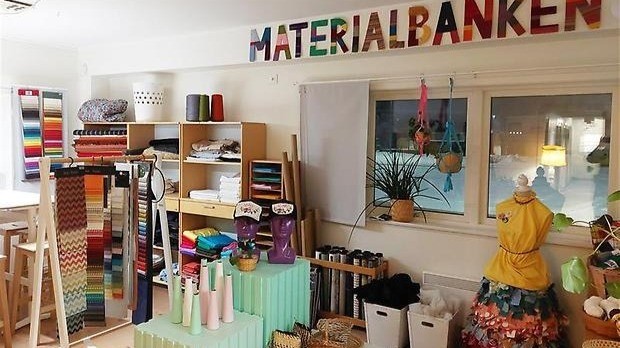
Östersund, a mid-sized Swedish municipality, opened Materialbanken in 2025 — a municipal depot that salvages materials from recycling centers and corporations, then redistributes them to schools and preschools. It’s part of a broader shift the city calls “glo och sno” (look and steal): abandoning the pretense of inventing everything locally and instead copying what works, then scaling it.
The numbers suggest this isn’t ceremonial. The city’s internal furniture reuse unit — Inredningsavdelningen — circulated furniture worth 10.2 million kronor in 2025, avoiding 250 tons of CO2 by keeping materials in use. School meal climate footprints dropped from 1.95 to 1.36 kg CO2e per kilo in preschools through supplier dialogue and menu adjustments. All municipal cars but one now run fossil-free; construction sites electrified machinery in partnership with Volvo and Skanska. Östersund also introduced “waste charters” — bus tours to the municipal dump designed as public pedagogy, testing formats for civic engagement beyond the seminar room.
What makes this legible as governance innovation rather than municipal housekeeping is how Östersund ties reuse to budgeting and investment processes. The city now requires climate assessments for investments over 100 million kronor and is piloting a climate budget as an annex to its financial budget. Process leader Caroline Hildahl describes an ecosystem approach: formal partners include the local university, adult education networks, and tourism bodies, each embedding climate targets into sectoral work. Council chair Niklas Daoson frames the logic clearly: “We don’t need to invent all solutions ourselves — copying each other is resource-efficient and lets us focus on scaling up.”
The model is explicitly designed for lateral transfer. Östersund adapted kitchen energy optimization from Uppsala and now shares its electrified construction playbook through Viable Cities and the Climate Leader Municipalities network. The municipality treats its governance experiments — from supplier dialogues to waste tourism — as public infrastructure others can fork and adapt. It’s a reminder that transformative governance often looks less like grand declarations and more like iterative testing of procurement rules, budget templates, and lunch menus.